Comparing eSIM and Physical SIM: Which is the Best Choice for You?
, by Sim Du Lịch AVIRO, 6 min reading time
, by Sim Du Lịch AVIRO, 6 min reading time
Comparing eSIMs and physical SIMs is a topic of great interest, especially given the increasing popularity of eSIMs worldwide. Understanding the differences between eSIMs and physical SIMs will help you make the right choice for your needs. This article will thoroughly analyze the similarities and differences, advantages and disadvantages of each type, and suggest the optimal SIM type for different usage requirements.

Source: Pexels
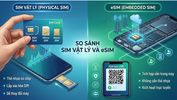
A physical SIM (short for Subscriber Identity Module) is a small, removable plastic chip, usually inserted into the SIM tray of a phone. This is the type of SIM we commonly know, used to store subscriber information such as phone number, carrier data, and to connect the device to the mobile network. You can easily remove it to replace it with another SIM when switching carriers or traveling.
An eSIM (embedded SIM) is a type of electronic SIM card integrated into the device's motherboard. Unlike a physical SIM, an eSIM is non-removable and operates entirely through software. Users simply download a service plan via a QR code or carrier app to quickly activate their eSIM.
eSIMs are becoming increasingly popular on modern devices such as iPhones, Google Pixels, and the latest Samsung Galaxy models, and are an attractive option for international travelers due to their flexibility and ease of remote setup.

Source: Aviro
Despite their differences in appearance, both types of SIM cards perform the same basic functions:
Connect the device to the mobile network.
Store subscriber information and phone numbers.
Allows the use of services such as making calls, sending messages, and accessing the internet.
|
Criteria |
Physical SIM |
eSIM |
|
Form |
The SIM card needs to be inserted into the device. |
Built inside the machine |
|
Setting |
It takes time waiting for the SIM card to be delivered and installed into the phone. |
Activate immediately after scanning the QR code. |
|
Flexible |
It's difficult to switch between carriers quickly. |
It's easy to change or add multiple network profiles. |
|
Popularity |
Very common, most phones support it. |
Only supported on certain newer devices (iPhone XS and later, Pixel 3+, Galaxy S20+,...) |
|
Number of packages |
Use only one sachet at a time. |
Multiple packets can be saved and switched easily. |
|
Possibility of damage/loss |
Easily broken, dropped, or lost. |
It cannot be lost because it's inside the device. |
|
Security |
Stolen items may be disassembled and used in other devices. |
Integrated with the device, making it difficult to tamper with if the device is lost. |
|
Device compatibility |
Most mobile devices are compatible. |
Only works on devices that support eSIM. |
|
Switch devices |
Simply remove the SIM card and insert it into the new phone. |
You need to deactivate the eSIM on your old device and re-register it on your new device. |
|
Parallel capability |
1 physical SIM + 1 eSIM (depending on the device) |
Multiple eSIMs can be stored and switched flexibly. |
|
Environmental impact |
Causes plastic waste and packaging |
Environmentally friendly |
|
New user experience |
Easy to understand and use, even for those who are not tech-savvy. |
You need to familiarize yourself with the QR code scanning and package selection process – it might be confusing at first. |
|
Price |
Highly dependent on local network providers, making comparisons difficult. |
Easily compare and choose the best value package from multiple international eSIM providers (Aviro, Airalo, Gohub, etc.). |

Source: Canva
You frequently travel internationally and need fast connectivity, but don't want to be dependent on buying a SIM card at the airport.
You are using a modern device that supports eSIM, such as an iPhone XS or later, Google Pixel 3+, or Samsung Galaxy S20+.
You like new technology, and value security and convenience.
You need to use multiple phone numbers on the same device, for example, one for personal use and one for work.
Check out Aviro's international travel eSIM packages here !
You are using a phone that does not support eSIM.
You prefer traditional simplicity and don't want to go through online setup procedures.
You only need to use one fixed-line local SIM card.
The answer is yes. Many modern phones support Dual SIM mode, allowing you to use one eSIM and one physical SIM simultaneously. This is very convenient if you want to keep your primary phone number but still need a travel data eSIM plan when traveling abroad.
If you're wondering whether to use an eSIM or a physical SIM, consider your device, usage needs, and desired flexibility. For devices that support eSIM, it's a smart, economical, and efficient choice in the digital age!
